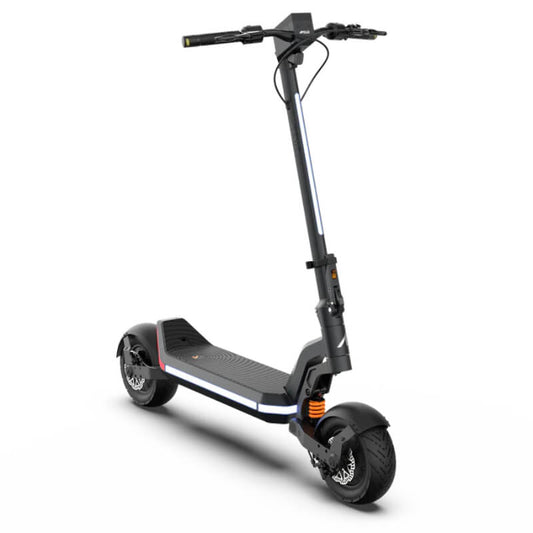
Electric Scooter Error Codes: E1, E2, E7 & E8

Electric scooter error codes can be frustrating because they usually show up at the worst time — right before a commute, halfway through a ride, or when the scooter suddenly refuses to accelerate.
The tricky part is that error codes are not universal. An E1 code on one scooter may mean something different on another brand. A Segway, Apollo, Kaabo, VSETT, NIU, Xiaomi, Kugoo, or generic controller-based scooter may all use different code systems.
Still, most electric scooter error codes point to a few common problem areas: the throttle, brake sensor, motor, controller, battery, display, wiring, or communication system.
If you are riding an Electric scooter model and you see an error code on the display, this guide will help you understand what it might mean, what you can safely check yourself, and when it is better to book a professional diagnosis.
Listen to the Audio Summary
Prefer listening? Explore our quick audio overview of this guide.
First: Error Codes Are Brand-Specific
Before replacing parts, remember this:
Always check your scooter’s manual or manufacturer error code chart first.
Record the code exactly as displayed, together with the brand and model. A code match for a different scooter does not diagnose yours.
The code is only the starting point. The real diagnosis comes from checking the symptoms, wiring, voltage, connectors, sensors, and controller response.
If you want to understand how the main electrical parts work together, ProMechBC’s guide on electric scooter battery, motor, and controller systems is a helpful place to start.
Documented error-code examples by brand and model
| Brand and model | Code | Documented meaning | External check or service step | Official source |
|---|---|---|---|---|
| Apollo Go | E1 | Brake sensor warning | With power off, check that the brake lever returns normally. | Apollo Go support |
| Apollo Go | E7 | Motor issue or overheating | Stop riding; use the model’s support guidance for diagnosis. | Apollo Go support |
| Segway Ninebot E2 Pro | 14 | Throttle Hall-signal fault | Check that the throttle is released and returns normally. | E2 Pro self-test guide |
| Segway Ninebot E2 Pro | 15 | Brake-lever Hall-signal fault | Check that the brake lever returns normally. | E2 Pro self-test guide |
| Segway Ninebot E2 Pro | 18 | Motor Hall-sensor fault | Arrange diagnosis; do not open the deck or reconnect internal wiring. | E2 Pro self-test guide |
| Segway Ninebot E2 Pro | 21 | Battery communication fault | Arrange diagnosis; do not open the battery or bypass protection. | E2 Pro self-test guide |
Stop riding and seek service if an error appears with battery heat, smoke, a burning smell, sudden power loss, brake failure or damaged wiring. Do not repeatedly reset a scooter with an unresolved electrical fault. ProMechBC can provide electric scooter diagnostics and repair in Vancouver.
These examples apply only to the named models. For E2, E3, E4, E5, E6, E8 or E9, consult your model's manual; no universal meaning is assigned here. The following sections describe symptoms, not a code lookup. Limit owner checks to the exterior with power off; do not open the battery or bypass sensors.
Throttle and acceleration symptoms
Throttle problems can prevent acceleration. Check this system only after matching the displayed code and symptoms to the documentation for your exact scooter model.
Common symptoms include:
The scooter turns on but will not accelerate.
The display works, but the motor does not respond.
The throttle feels loose, sticky, or inconsistent.
The error appears after rain, a crash, or handlebar work.
The throttle sends a signal to the controller. If the controller receives a signal that is too high, too low, unstable, or missing, it may block acceleration for safety.
What you can check:
With power off, check that the throttle is not physically stuck.
Inspect the exterior of its cable near the handlebar without opening the scooter or disconnecting wiring.
Record whether the fault appeared after exposure to water.
Do not restart a wet or damaged scooter to continue riding; follow the model manual or arrange inspection.
Do not force a stuck throttle or ride if acceleration is unpredictable. Have a persistent fault inspected.

Brake sensor symptoms
Brake sensor faults can prevent acceleration or interrupt motor power. The error code used for this fault depends on the model; do not assume that E2 means a brake fault.
Most electric scooters have electronic brake cut-off sensors. When you pull the brake lever, the scooter tells the controller to stop sending power to the motor. This prevents the motor from accelerating while braking.
If the brake sensor is stuck “on,” the scooter may think you are braking all the time.
Common symptoms include:
The scooter powers on but will not move.
The brake light may stay on.
The motor cuts out randomly.
The error appears after adjusting the brakes.
One brake lever feels loose or does not return properly.
What you can check:
Make sure both brake levers fully return to their normal position.
Check whether the brake light stays on when the lever is released.
Look for damage near the brake lever wiring.
If your scooter has mechanical brakes, check if the cable tension is too tight.
Brake issues are not something to ignore. If your brake lever, sensor, or motor cut-off is malfunctioning, the scooter may be unsafe even if it still rides. For more context, read our guide to electric scooter parts, brakes, throttle, and frame safety.

Motor and phase-wire symptoms
Motor wiring faults can cause rough operation or prevent movement. A code number alone does not establish that a phase wire or motor has failed.
The motor usually connects to the controller through thick phase wires and smaller sensor wires. If one of those wires is loose, damaged, melted, corroded, or shorted, the scooter may show an error and refuse to run properly.
Common symptoms include:
The motor jerks instead of spinning smoothly.
The scooter vibrates when you press the throttle.
Acceleration feels rough.
The motor makes a humming or grinding electrical sound.
The scooter stops under load or while climbing hills.
This type of problem often needs proper testing. Guessing can get expensive because the issue may be the motor, controller, wiring harness, or connector.
If the motor cable is visibly damaged, do not keep riding. A shorted motor phase wire can damage the controller.

Battery voltage symptoms
Battery voltage or protection faults may cause shutdowns, but their code labels depend on the model. Confirm the manufacturer's definition before attributing a code to the battery.
Electric scooter batteries are managed by a Battery Management System, also called the BMS. The BMS protects the battery from over-discharge, overcharge, overheating, and unsafe current draw.
Possible causes include:
The battery is too low.
The battery voltage drops under load.
The charger is not working correctly.
The charge port is damaged.
The BMS has triggered protection mode.
The battery pack is aging or unbalanced.
Common symptoms include:
The scooter turns on, then shuts off.
The battery percentage drops suddenly.
The scooter cuts out on hills.
The scooter charges but does not hold range.
The display shows voltage-related warnings.
Battery symptoms can resemble other electrical faults. ProMechBC offers assessment and repair of existing batteries, including BMS replacement where suitable. We do not replace individual cells, build new packs or offer full pack rebuilds.

Controller and heat-related symptoms
Controller faults or excessive heat may interrupt power. Use the exact model's documentation to identify any associated code.
The controller is the brain between your battery, throttle, brakes, display, and motor. If it overheats or detects an unsafe electrical condition, it may shut down power to protect the system.
Common causes include:
Long hill climbs.
Heavy load.
Damaged motor wiring.
Water entering the controller compartment.
Loose connectors.
Internal controller failure.
Riding with underinflated tires, which increases motor load.
Common symptoms include:
Power cuts out under acceleration.
The scooter works again after cooling down.
The deck or controller area feels unusually hot.
The scooter shuts off when climbing hills.
The error appears after rain or washing.
If the controller smells burnt, clicks repeatedly, or causes the scooter to shut down instantly, stop riding and get it checked.

Display and communication symptoms
A communication fault can interrupt signals between the display and controller. There is no single code number for this fault across all scooters.
The display is not just a screen. On many scooters, it also handles power settings, throttle input, mode selection, speed limits, and error reporting. If the display and controller cannot talk to each other, the scooter may not operate.
Possible causes include:
Loose display cable.
Damaged handlebar harness.
Water inside the display.
Bent connector pins.
Controller communication failure.
Aftermarket display mismatch.
Common symptoms include:
Display turns on but scooter does not move.
Display flickers or resets.
Speed reading is wrong.
Settings do not save.
Error appears after handlebar impact or rain.
Be careful with aftermarket displays. A display that physically plugs in is not always electronically compatible with your controller.

Motor and Hall-sensor symptoms
Motor, sensor and controller faults can produce similar symptoms. The documented Apollo Go E7 example above is specific to that model and must not be applied to another scooter.
Hall sensors help the controller understand motor position. Without that signal, the motor may not start smoothly or may not run at all.
Common symptoms include:
The motor stutters.
The scooter jerks forward but does not accelerate.
The wheel feels resistant when powered.
The scooter works sometimes and fails other times.
The error appears after motor cable damage.
Possible causes include:
Damaged Hall sensor wire.
Loose motor connector.
Water inside the motor.
Internal motor sensor failure.
Controller unable to read motor position.
A persistent motor fault needs diagnosis. Do not repeatedly reset the scooter to keep riding with an unresolved fault.

Throttle signal checks
An abnormal throttle signal can prevent acceleration. Determine the applicable code from the manual rather than assuming E8 or E1 identifies this fault.
A throttle usually sends a voltage signal to the controller. If that signal is outside the expected range, the controller may block power.
Common causes include:
Broken throttle.
Water inside the throttle.
Loose connector.
Damaged cable near the handlebar.
Throttle pressed during startup.
Wrong replacement throttle installed.
Try turning the scooter off, making sure the throttle is fully released, and turning it back on. Some scooters trigger an error if the throttle is pressed during startup.
If the error returns, the throttle signal should be tested instead of guessing.

Other symptoms and model-specific warnings
For E9 or another code not documented for your model here, use the manufacturer's code chart. Do not choose a replacement part from a generic code list.
Record the symptoms below for the technician; they do not identify a failed part by themselves:
If the brake light stays on, check the brake sensors.
If the display flickers, check communication wiring.
If the scooter cuts out under load, check battery and controller.
If the error appeared after rain, check for water damage.
This is a good example of why error codes should be treated as clues, not final answers.

Error Codes After Rain or Wet Riding
Many scooter faults appear after rain, wet roads, or washing the scooter.
Even scooters with an IP rating are not fully waterproof. Water can enter through the display, throttle, brake sensors, deck seals, charging port, motor cable, or controller compartment.
Rain-related symptoms include:
Random error codes.
Throttle not responding.
Display fogging.
Brake sensor staying active.
Scooter turning on by itself.
Charging problems.
Sudden power cut-outs.
If your scooter shows an error after getting wet, do not plug it into the charger immediately. Let it dry in a safe indoor area first. If you suspect water entered the battery, controller, or charging port, get it inspected before charging.

For Vancouver riders, this matters a lot because wet roads are part of daily life. Our guide to Vancouver e-scooter rules, safety, rain riding, and theft prevention covers more local riding considerations.
Error Codes After a Tire Change or Repair
Sometimes an error appears right after a tire replacement, brake adjustment, handlebar repair, or motor work.
That does not always mean the new part is bad. It may mean a cable was pulled, a connector was not fully seated, a motor wire was pinched, or the brake sensor position changed.
Common post-repair causes include:
Motor cable not fully connected.
Brake sensor stuck after adjustment.
Damaged Hall sensor wire during motor wheel removal.
Pinched cable near the axle.
Incorrect controller/display pairing.
Loose handlebar harness connector.
If the error appeared immediately after a repair, start by checking the area that was worked on.
Can You Reset Electric Scooter Error Codes?
Sometimes yes, but a reset does not fix the underlying problem.
If your model's manual permits a restart, follow its procedure after checking that no danger signs are present.
Do not restart to resume riding if the battery is unusually hot, brakes malfunction, wiring is damaged or behaviour is unpredictable. If the code returns, have the cause diagnosed.
Some scooters also have app-based diagnostics or factory reset options. Be careful with advanced settings. Changing voltage, wheel size, speed limit, P-settings, or controller parameters incorrectly can create new problems.
If the code comes back immediately, the scooter is detecting a real fault.
When You Should Stop Riding Immediately
Stop riding and get the scooter inspected if:
The motor jerks or locks.
You smell burning plastic or electronics.
The battery gets unusually hot.
The scooter shuts off while riding.
The brakes do not cut motor power properly.
The display shows repeated voltage errors.
The error appears after water exposure.
The motor cable is damaged near the axle.
The scooter accelerates unpredictably.
Electric scooters are compact, but they carry high-current electrical systems. A small wiring fault can become a controller failure, motor failure, or battery safety issue if ignored.
Why Professional Diagnosis Saves Money
A lot of riders replace the wrong part first.
They buy a new throttle when the issue is the controller.
They replace the display when the problem is a wiring harness.
They replace the battery when the charger or charge port is the real issue.
They replace the motor when the controller is not reading the signal correctly.
A proper diagnosis checks the system step by step: battery voltage, charger output, connectors, throttle signal, brake cut-off signal, motor phase wires, Hall sensor wires, controller output, and display communication.
Internal electrical tests, including live voltage measurements, should be performed by a qualified technician. Limit owner checks to safe external inspection described in the model’s manual.

ProMechBC provides electric scooter repair in Vancouver for diagnostics, electrical faults, brake issues, tire service, battery problems, motor faults, controller issues, and general tune-ups.
How to Prevent Error Codes in the Future
You cannot prevent every electrical problem, but good maintenance reduces the risk.
Keep the scooter dry whenever possible.
Avoid pressure washing.
Do not ride through deep puddles.
Keep tires properly inflated.
Do not ignore brake sensor issues.
Inspect motor cables after tire work.
Charge with the correct charger.
Avoid running the battery completely empty.
Check connectors after crashes or handlebar impacts.
Book service when the scooter starts acting differently.
For routine care, see our electric scooter maintenance guide. If the display turns on but the scooter will not move, see our no-movement troubleshooting guide.

Final Thoughts
Interpret an error code using the brand, model and matching documentation. Use the code and symptoms to guide diagnosis rather than selecting a replacement part from a generic chart.
The safest approach is simple:
Check the manual first.
Look at the symptoms.
Do basic visual checks.
Do not ride if the scooter behaves unpredictably.
Get professional diagnostics if the error returns.
If your scooter is showing an error code and you are not sure what it means, ProMechBC can help diagnose the issue properly and recommend the right repair instead of guessing.
Need help with an electric scooter error code in Vancouver? Visit ProMechBC for professional diagnostics and repair service.