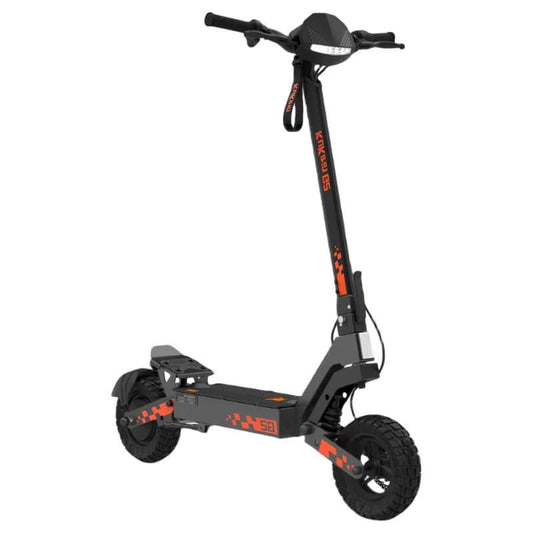
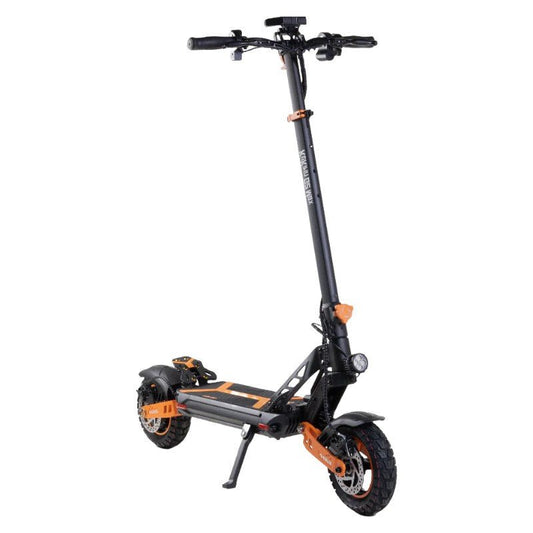
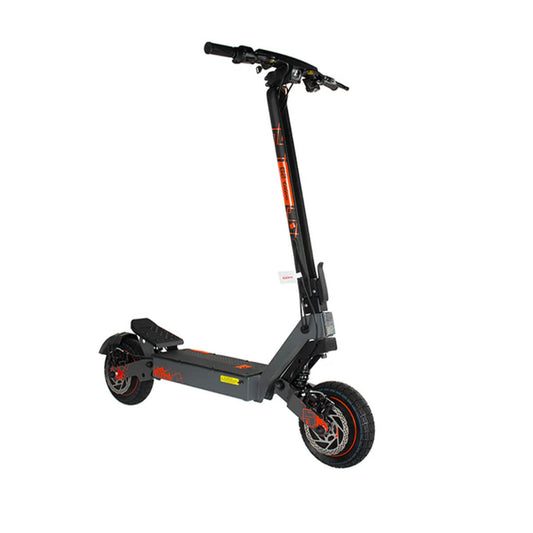
KUKIRIN G2 vs KUKIRIN G2 Master

The practical difference between these two scooters is straightforward. The KUKIRIN G2 is the lighter, simpler and more affordable single-motor option. The KUKIRIN G2 Master adds dual motors, a substantially larger battery and more performance-focused suspension, but it is also heavier and harder to transport.
For flatter routes, occasional recreational riding and easier storage, the G2 is usually the more sensible choice. For steep grades, stronger acceleration and rougher terrain, the G2 Master provides considerably more capability. This comparison uses the current manufacturer-listed configurations: a 48 V, 15 Ah G2 and a 52 V, 20.8 Ah G2 Master.
Quick verdict
| Rider priority | Better choice | Why |
|---|---|---|
| Lower purchase cost | KUKIRIN G2 | Simpler single-motor platform |
| Easier storage and lifting | KUKIRIN G2 | Approximately 7.8 kg lighter |
| Flat and moderately hilly routes | KUKIRIN G2 | 800 W motor with less weight to move |
| Steep hills | KUKIRIN G2 Master | Two 1000 W motors |
| Strong acceleration | KUKIRIN G2 Master | 2000 W total rated motor power |
| Longer manufacturer-claimed range | KUKIRIN G2 Master | Larger 52 V, 20.8 Ah battery |
| Rougher recreational terrain | KUKIRIN G2 Master | Hydraulic suspension and dual-motor power |
| Frequent stairs or transit transfers | Neither is ideal | Both are heavy performance scooters |
The G2 is not a lightweight commuter scooter, but it is much easier to manage than the Master. The Master makes sense when its extra performance will be used regularly rather than purchased only for the higher numbers.
For a broader explanation of motor power, range, suspension and portability, see our guide on how to choose an electric scooter.

KUKIRIN G2 vs G2 Master specifications
| Specification | KUKIRIN G2 | KUKIRIN G2 Master |
|---|---|---|
| Drive system | Single motor | Dual motor |
| Rated motor power | 800 W | 2 × 1000 W |
| Total rated motor power | 800 W | 2000 W |
| Battery | 48 V, 15 Ah | 52 V, 20.8 Ah |
| Approximate nominal battery energy | 720 Wh | 1082 Wh |
| Manufacturer-listed top speed | 45 km/h | 60 km/h |
| Manufacturer-listed maximum range | 55 km | 70 km |
| Manufacturer climbing claim | Up to 20° | Up to 28° |
| Suspension | Front and rear spring suspension | Front and rear hydraulic shock absorbers |
| Brakes | Front and rear disc brakes | Front and rear disc brakes |
| Tyres | 10-inch tubeless off-road | 10-inch tubeless off-road |
| Product weight | 25.3 ± 0.5 kg | 33.1 ± 0.5 kg |
| Maximum rider load | 120 kg | 120 kg |
| Charging time | 8–9 hours | 7–8 hours |
| Water-resistance rating | IP54 | IP54 |
These are manufacturer-listed figures rather than independent real-world measurements. KuKirin states that the G2’s 55 km claim is based on favourable conditions, including a 65 kg load and moderate speed. The company also notes that G2 Master range varies with rider weight, speed mode, terrain and weather.

Motor power and hill performance
The G2 uses one 800 W motor. That is already more powerful than a basic 350–500 W commuter scooter and should provide adequate acceleration for many recreational routes. KuKirin lists a maximum climbing capability of 20°, although actual performance will depend on rider weight, battery charge, tyre pressure, surface grip and the length of the incline.
The G2 Master uses two 1000 W motors, giving it 2000 W of total rated motor power. KuKirin lists a climbing capability of up to 28°. The larger difference is not simply its higher maximum speed. Dual motors provide more available power when starting on a grade, maintaining speed under load or riding across uneven surfaces.
For riders regularly dealing with steep grades, the G2 Master is the clear choice. The G2 may be sufficient for moderate hills, but it has less performance in reserve. A heavier rider or a route with repeated climbs will make that difference more noticeable.
Manufacturer climbing angles should not be interpreted as guarantees. A short, dry incline under controlled conditions is different from a long Vancouver hill with a heavier rider, a partially discharged battery and wet pavement.

Battery capacity and claimed range
The G2’s 48 V, 15 Ah battery works out to approximately 720 Wh of nominal energy. The G2 Master’s 52 V, 20.8 Ah battery is approximately 1082 Wh. Based on those listed values, the Master carries roughly 50% more nominal battery energy.
That difference does not translate directly into 50% more claimed range. The listed maximum increases from 55 km to 70 km because the Master is heavier and may be powering two motors. Its larger battery supports both additional distance and higher performance.
Neither range claim should be treated as a normal guaranteed result. Range can fall when:
- The rider is heavier.
- Dual-motor or high-speed modes are used frequently.
- The route includes sustained hills.
- Temperatures are low.
- Tyre pressure is incorrect.
- The battery is older or not fully charged.
- There is strong wind or frequent stop-and-start riding.

A buyer with a 25 km daily round trip should not select a scooter based on a laboratory-style 55 km claim without leaving a reasonable battery reserve.
Ride comfort and handling
Both models use 10-inch tubeless off-road tyres and suspension at the front and rear. The difference is in the suspension hardware.
The G2 uses spring suspension. It is designed to reduce impacts from cracked pavement, gravel and uneven surfaces without adding the weight and complexity of the Master’s system.
The G2 Master uses front and rear hydraulic shock absorbers. On paper, this is the more performance-oriented arrangement and is better suited to riders who regularly encounter rougher terrain or want greater control over repeated impacts. It also has an adjustable stem, which can help riders establish a more suitable standing position.
Suspension type alone does not determine comfort. Rider weight, tyre pressure, deck position and riding speed still matter. A more capable suspension cannot make potholes safe at excessive speed.

Portability and everyday storage
The G2 weighs approximately 25.3 kg. That is manageable for occasional lifting, but carrying it up several flights of stairs every day would still be difficult.
The G2 Master weighs approximately 33.1 kg. The difference is close to 8 kg, which is significant when loading the scooter into a vehicle, moving it through a narrow entrance or storing it inside an apartment.
The Master folds, but folding does not make it lightweight. Buyers should consider the entire route between storage and riding:
- Are there stairs at home or work?
- Can the scooter be rolled into storage?
- Is there enough room for its folded dimensions?
- Will it need to be lifted into a car regularly?
- Can it be stored securely at ground level?
When storage is difficult, the G2 is the more practical of the two. When secure ground-level storage is available, the Master’s weight becomes less restrictive.

Brakes, tyres and wet conditions
Both scooters use front and rear disc brakes. Both also use 10-inch tubeless off-road tyres. The G2 and G2 Master are each listed with an IP54 rating.
IP54 should not be treated as permission to ride through deep standing water, pressure-wash the scooter or leave it exposed outdoors. Water resistance can also decline as seals age or after the scooter has been opened for repair.
Wet pavement changes braking distance and available tyre grip. Riders should reduce speed, brake progressively and inspect the scooter after exposure to rain. Brake adjustment, tyre condition and correct pressure matter more than the presence of an off-road tread pattern.
Whichever model you choose, access to local parts and electric scooter repair should be considered part of the ownership decision. Heavier, faster scooters place greater demands on tyres, brake components, fasteners and suspension hardware.

Can either scooter be used legally on Vancouver roads?
This is an important limitation.
Under British Columbia’s electric kick scooter pilot rules, a legal device for public-road use must have no more than 500 W of continuous motor output and a maximum speed capability of 25 km/h. Vancouver also sets a maximum operating speed of 25 km/h and prohibits riding on sidewalks.
The G2 is listed with an 800 W motor and a 45 km/h maximum capability. The G2 Master is listed with two 1000 W motors and a 60 km/h maximum capability. In their listed factory configurations, neither fits the provincial definition of an electric kick scooter permitted on public roads under the pilot program.
Selecting a slower ride mode does not necessarily change the device’s legal maximum-speed capability or continuous motor rating. Before purchasing either model, determine where it will be used and verify the current provincial and municipal rules. Private-property and off-road access also depend on the property owner and applicable land-use rules.
Who should choose the KUKIRIN G2?
Choose the G2 when you want a capable recreational scooter without moving into a large dual-motor platform.
It is the better fit for riders who:
- Prefer lower weight and simpler storage.
- Mostly ride on flat or moderately hilly terrain.
- Do not need aggressive acceleration.
- Want suspension and 10-inch tyres without the Master’s size.
- Have a shorter route that does not require the larger battery.
- Prioritize value over maximum performance.
The G2 still weighs more than many commuter models. Buyers who need something for daily transit connections or frequent stairs should compare it with lighter options in the broader electric scooter collection.
Who should choose the KUKIRIN G2 Master?
Choose the G2 Master when steep hills, stronger acceleration and rougher recreational terrain are central to the purchase.
It is the better fit for riders who:
- Will regularly use dual-motor performance.
- Face sustained inclines.
- Want the larger 52 V, 20.8 Ah battery.
- Prefer hydraulic suspension.
- Have secure ground-level storage.
- Understand the added maintenance and handling demands of a heavier performance scooter.
- Are comfortable managing a scooter capable of substantially higher speeds.
The Master is not automatically the better purchase because its specifications are higher. It is better only when the rider’s route and storage arrangement justify the additional power and weight.
Final recommendation
For most buyers choosing between only these two models, the KUKIRIN G2 is the more practical starting point. It provides an 800 W motor, suspension, disc brakes and 10-inch tyres in a package that is approximately 8 kg lighter than the Master.
The KUKIRIN G2 Master is the right upgrade for riders who have a clear need for stronger hill performance, dual motors, a larger battery and hydraulic suspension. Its advantages are substantial, but so are its weight, speed and ownership demands.
Start with the route rather than the specification sheet. Measure the longest regular trip, identify the steepest hill, confirm the storage path and review the rules governing the intended riding location. You can then compare both models with the rest of the KUKIRIN scooters.